Company ∙
Our new logo: a florin, a function
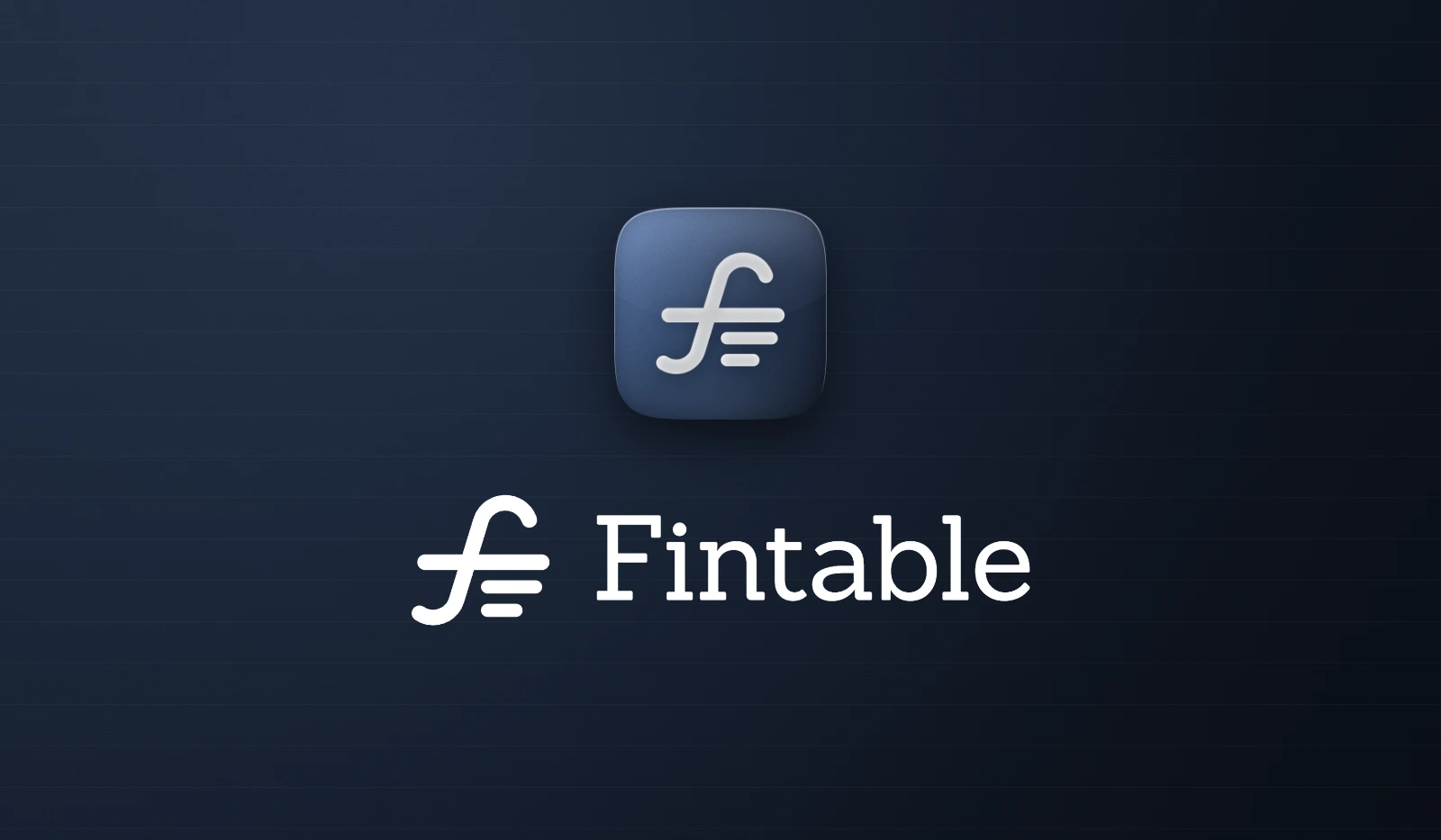
Fintable has a new logo. The symbol is a ƒ — a florin, and a mathematical function — whose crossbar is a table. We were inspired by a bit of history.
What the shape symbolizes
The reason we like the florin is that it has many wonderful meanings. Every one of these readings is very apt.
- ƒ — a currency. The florin sign: the Florentine coin, and still the currency mark of the Aruban florin.
- ƒ — a function. In mathematics, Johann Bernoulli was writing ƒx for a function of x by 1718, and in 1734 Leonhard Euler settled on the f(x) that every calculus student still uses — though the bookkeepers had the symbol first. Like a mathematical function, Fintable takes inputs (financial data) and produces outputs (your spreadsheets, integrations, and cleaned API output).
- F — a letter, and a bookkeeping mark. The first letter of the name, and the symbol clerks wrote in the money column of a ledger. Its crossbar runs the full width, with two shorter rows beneath it: a table.
Historical note about the florin
In 1252 the city of Florence began striking a small gold coin. It carried the city's lily on one face and John the Baptist on the other, and it held about three and a half grams of gold — the same weight, struck to the same standard, every time. That reliability was the whole point. Merchants across Europe could accept it without weighing it or arguing about it, and for the better part of two centuries the fiorino d'oro was the closest thing the continent had to a common currency.
Other cities copied it, and the name travelled with the coin. It became the florin in England, the florijn in the Low Countries, the forint in Hungary — where it is still the currency today. And it left behind a symbol: ƒ, the florin sign, which stood on Dutch price tags until the euro arrived and is still the currency mark of the Aruban florin.
The ƒ was not a logo or a piece of signage; it was a bookkeeping mark. Dutch and Flemish merchants wrote it in the money column of their account books, and the habit outlived the coin — when the guilder became the currency of the Netherlands the ƒ went with it, standing in front of every price and every balance right up to the euro changeover in 2002.
The timing is not a coincidence either. Double-entry bookkeeping was taking shape in the same Italian merchant cities in the same period, and the earliest surviving double-entry ledgers were written by Florentine and Genoese houses within a few decades of the first florins. The coin and the account book grew up together. For most of the seven centuries since, this symbol has meant one specific thing: a number in a column of accounts.
Fn, for math and code
There is exactly one abbreviated form, and it reads Fn rather than Fin. Since the symbol is a ƒ — a function — Fn in an API reference or an SDK readme is less a truncation of the name than a second reading of the symbol that happens to be true.
Download the brand guide for promotion
The logo, the symbol, the app icon, the colours, the clear-space rules and a ZIP of everything are at fintable.io/brand.html. If you are writing about us, running a directory, or building an integration, help yourself — no permission required, provided the files are used as they come.
If a placement seems to need something that isn't there, write to us instead of adapting the logo yourself. We would much rather make you the version you need.